Embracing an AI-First Mindset in Marketing
Web-first. Mobile-first. Now, AI-first.
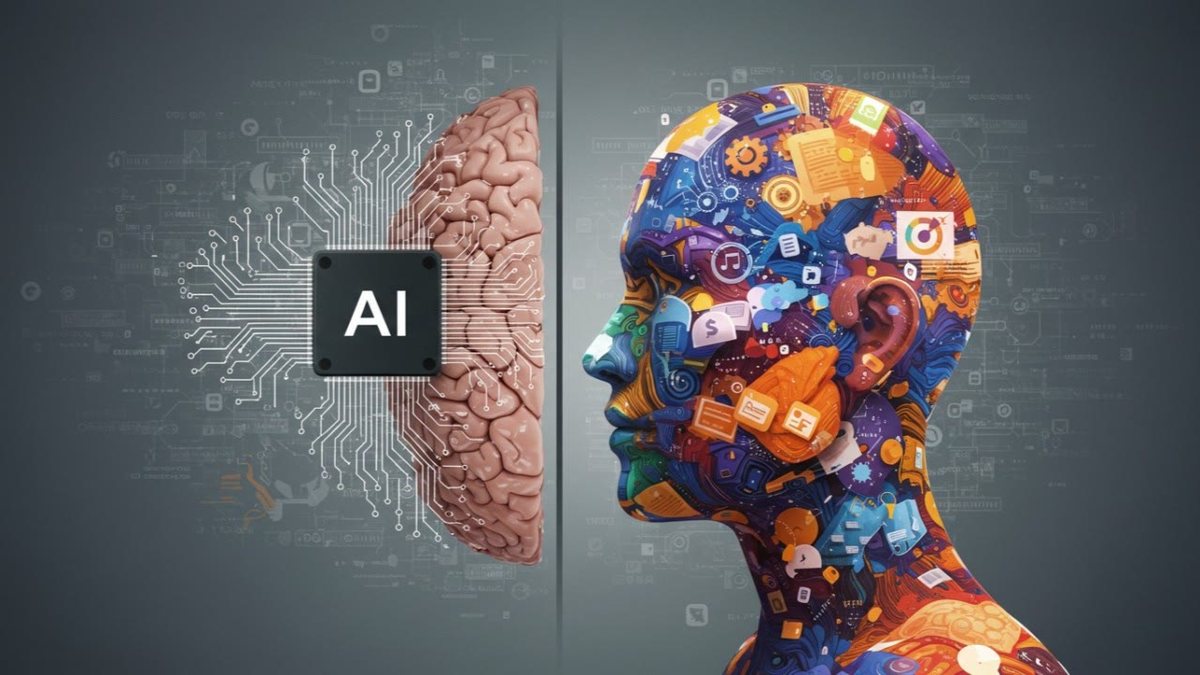
"Web-first. Mobile-first. Now, AI-first."
Remember when companies scrambled to adopt a "web-first" strategy, belatedly realizing websites weren't just digital brochures but entirely new business channels? Remember the painful transitions as organizations pivoted to "mobile-first," often years after consumers shifted their attention to smartphones?
Today, we face the "AI-first" imperative—a transformation far more profound than either preceding shift but compressed into a fraction of the time. While previous digital revolutions unfolded over years, recent research from METR reveals that the length of complex tasks that AI can complete autonomously has doubled approximately every seven months since 2019. This "Moore's Law for AI" isn't just an interesting statistic—it's a business ultimatum dividing companies into two distinct camps: those building with an AI-first mindset and those who will soon be scrambling to catch up.
The executives who once declared, "We don't need a website" or dismissed mobile optimization are today's cautionary tales of strategic shortsightedness. Tomorrow's case studies in missed opportunities are being written right now by organizations that view AI as merely an incremental tool rather than the foundation for completely reimagined marketing.
The Vanishing "AI-Can't" List
The list of tasks that AI cannot accomplish shrinks by the day. The question isn't whether AI will transform marketing—it already has. The real question is: Are you proactively adapting or waiting to be left behind?
Consider this: Google's AI "co-scientist" recently solved a 10-year superbug problem in just two days. What scientists took a decade to unravel, AI accomplished in 48 hours. This exponential acceleration isn't limited to scientific breakthroughs—it's happening across every field, including marketing.
Beyond "AI as a Tool" to "AI as Foundation"
Let me be clear: an AI-first mentality isn't about sprinkling some machine learning into existing processes or adding a chatbot to your website. Those are "AI as a tool" approaches – valuable but ultimately insufficient.
AI-first means fundamentally reimagining your entire marketing approach with artificial intelligence as the foundation. It means asking: "If we were building this campaign, customer journey, or process today, knowing what AI can do, how would we design it differently from the ground up?"
This mirrors our previous transitions:
• We didn't just place print brochures on websites – we created interactive digital experiences
• We didn't merely shrink websites for smartphones – we designed for mobile contexts from scratch
• The AI-first movement demands the same level of complete rethinking
From Automation to Augmentation
The initial wave of AI adoption focused primarily on automation – doing the same things more efficiently. That's worthwhile but limited in scope. The actual transformation happens when we evolve from automation to augmentation – where AI doesn't just execute tasks but unlocks entirely new possibilities:
Level 1: Basic Automation Simply making existing processes faster and cheaper
Level 2: Advanced Automation Adding intelligence to existing processes with some decision-making capability
Level 3: True Augmentation Enabling entirely new capabilities that weren't previously possible:
• Not just scheduling social posts, but automatically generating creative variations that resonate with specific audience segments
• Not just segmenting customers, but identifying emerging patterns before they become obvious
• Not just reporting on performance, but recommending strategic pivots in real-time based on market signals humans might miss
Rising Customer Expectations in an AI-First World
Your customers live in an AI-powered reality, experiencing daily personalized content streams, intelligent shopping recommendations, and conversational interfaces. These experiences constantly raise the bar for all brand interactions.
With an AI-first approach, you don't just meet these rising expectations—you can exceed them through:
• Automated Strategy Development: Moving beyond tactical execution to adopting AI systems that craft comprehensive campaign strategy briefs by synthesizing competitive intelligence, historical performance data, and emerging trends. Identify untapped market opportunities and recommend precise positioning strategies that human strategists might overlook.
• Enhanced Content & Campaigns: Generating creative variations, predicting engagement, and recommending real-time strategic pivots for better results.
• Advanced Customer Intelligence: Identifying emerging patterns before they become trends and anticipating needs before being consciously realized.
• Superior Experience Delivery: Tailoring interactions to individual preferences instantly and resolving complex issues in seconds rather than days.
Marketing's AI Transformation
For marketing leaders specifically, AI is revolutionizing every aspect of our discipline:
• Content creation and optimization: AI now generates high-quality drafts, personalizes content at scale, and optimizes creative elements based on performance data.
• Campaign management: Moving beyond simple A/B testing to multivariate optimization that continuously improves through machine learning.
• Customer insights: Discovering patterns and opportunities in your data that would be impossible to identify manually.
• Media allocation: Dynamic budget optimization that responds to market changes in real-time.
• Experience orchestration: Coordinating consistent, personalized experiences across all touchpoints.
Real-World Impact of AI-First Marketing
The research on the tangible benefits of an AI-first approach is clear. Organizations that embrace comprehensive AI implementation in marketing are seeing remarkable results:
• ROI: 74% of early AI adopters achieve positive ROI within the first year of implementation, with Google Cloud research showing that 86% of production-stage AI implementations drive at least 6% revenue growth. A McKinsey study focused on Marketing and Sales found that firms that invest in AI are seeing a revenue uplift of 3 to 15 percent and a sales ROI uplift of 10 to 20 percent.
• Production Efficiency: AI-augmented marketing teams report saving an average of 11.4 hours per week, according to Deloitte's analysis of 650 marketing leaders.
• Campaign Performance: Custom AI models drove a 40% improvement in campaign performance, 35% increase in customer engagement, and 50% better ROI forecasting accuracy.
The Organizational Evolution Required
Becoming AI-first demands more than new technology—it requires organizational transformation:
• Skills and talent: Your team needs new capabilities. Data literacy becomes as fundamental as marketing expertise. You'll need "translators" who can bridge marketing strategy and AI implementation.
• Workflows and processes: Decision cycles can accelerate dramatically. Testing becomes continuous rather than episodic.
• Data strategy: Your AI capabilities can only be as good as your data foundation. This necessitates breaking down silos and creating a unified view of your customer.
Addressing the Challenges of AI-First Transformation
The path to AI-first marketing isn't without obstacles. Three primary challenges emerge for most organizations:
1. Data Quality and Integration Issues
According to a Drexel University study only 12% of firms report that their data is of sufficient quality and accessibility for effective AI implementation. The reality is that AI capabilities are only as good as the data foundation they're built upon.
Organizations with an AI-first mindset recognize this dependency and prioritize establishing robust data infrastructure before attempting advanced AI implementations. They create unified customer data platforms that integrate information across touchpoints while maintaining strict data governance protocols to ensure quality and compliance.
2. Talent and Organizational Resistance
Research from Forrester reveals that a large percentage of agencies face workforce resistance to AI adoption, which can delay ROI realization. This resistance often stems from legitimate concerns about job displacement and skill obsolescence.
Leading organizations address this by creating hybrid teams and investing heavily in upskilling. Companies that invest in change management are 1.6x more likely to exceed implementation expectations, making organizational readiness as crucial as technological readiness.
3. Implementation Complexity
Successful AI-first transformations tackle this through phased approaches—creating strategic roadmaps that deliver incremental value while building toward the larger vision. They establish clear ethical guidelines and governance frameworks to ensure responsible AI use, viewing these not as constraints but as essential foundations for sustainable growth.
Your Implementation Roadmap
How do you begin this transformation while navigating these challenges? Here's your actionable framework:
• Start with problems, not technology. Identify where your customer experience or business operations fall short, then explore how AI can bridge those gaps.
• Build ethics and governance into your foundation. Establish clear principles for data usage, algorithmic fairness, and transparency.
• Strengthen your data foundation. AI is only as good as the data feeding it. Evaluate if your data is collected, integrated, and accessible for AI use. Break down silos between your CRM, web analytics, and social media data, and ensure you have mechanisms to use that data for AI modeling.
• Create feedback loops for continuous improvement. AI systems learn and evolve, and your organization's approach to AI should do the same.
• Embrace experimentation. The organizations thriving with AI maintain a portfolio of initiatives—some ready for production, others still in exploration.
Augmented Creativity
As AI takes over analytical heavy lifting, marketing teams gain more capacity for creativity. We'll spend less time pulling reports or tweaking email send times, and more energy brainstorming breakthrough ideas, crafting narratives, and designing experiences.
The creative spark – that uniquely human ability to conceive an innovative campaign or compelling story – will work hand-in-hand with AI's capabilities. Consider it augmented creativity: AI might draft content or provide insights, and human creatives will refine and elevate it.
The Expanding Horizon
What makes the AI revolution particularly significant is its scope. Unlike previous technological shifts, which primarily affected specific business functions, AI is transformative across every department and industry. Marketing, operations, HR, finance, and product development are all experiencing profound AI-driven change simultaneously.
For marketers specifically, this means a fundamental reimagining of:
• How we understand customer needs and behaviors
• How we create and distribute content
• How we measure and optimize performance
• How we structure and deploy marketing teams
The Path Forward: Your AI Imperative
The transition to AI-first won't happen overnight. Just as web and mobile transformations unfolded over years, your AI journey will be iterative. But unlike those previous shifts, AI technology is evolving at unprecedented speed. The gap between leaders and laggards will widen rapidly.
The marketing leaders who thrive in this new landscape will be those who embrace AI not just as a tool, but as a fundamental shift in how we approach the discipline itself. They'll use AI to handle the grunt work while elevating the human elements of creativity, empathy, strategic insight, and ethical guidance.
Your Call to Action
The time for incremental AI experimentation has passed. To remain competitive in today's market:
- Assess your current AI readiness using the framework outlined above. Identify your most pressing gaps in data infrastructure, team capabilities, and organizational processes.
- Develop a 90-day AI acceleration plan that prioritizes one high-impact marketing function for AI transformation. Begin with a clear business problem, not just technology deployment.
- Invest in both technology and talent simultaneously. Allocate resources not just to AI tools but to upskilling your team and redesigning workflows.
- Establish clear AI governance to ensure ethical, responsible implementation that builds customer trust.
Remember: The cost of inaction now far exceeds the cost of imperfect action. Your competitors are already implementing AI-first strategies. Every quarter you delay widens the capability gap exponentially.
Together, humans + AI achieve more than either alone. But this partnership requires intentional design and bold leadership. The future belongs to those who build it first.